Quick overview
Packing furniture for a long-distance move does not have to be stressful. With the right approach -- choosing what to keep, disassembling carefully, wrapping properly, and labeling everything -- you can protect your belongings and make unpacking much easier.
If you want expert help with your furniture move, get a free moving quote and let professionals handle the heavy lifting.
1. Choose what to keep
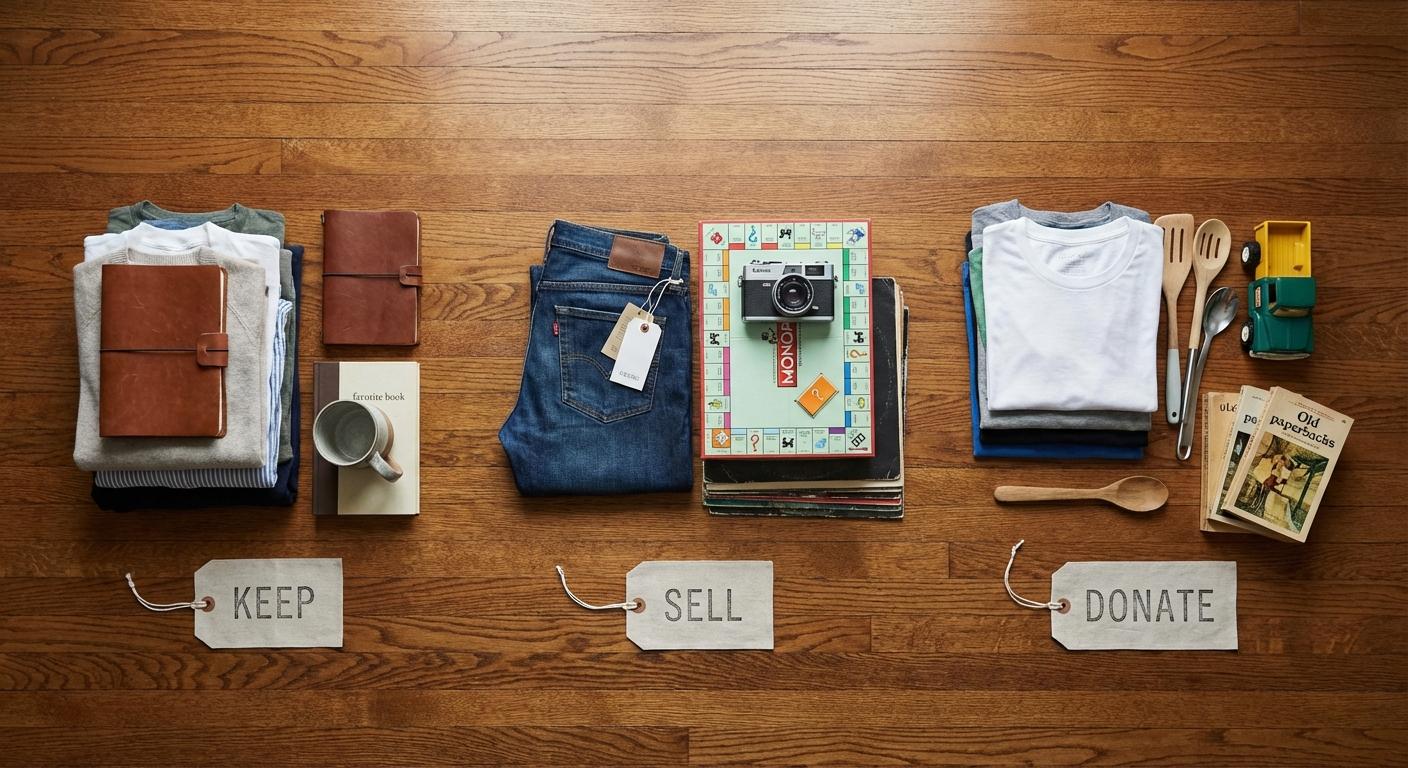
Before you start packing, evaluate which furniture pieces are worth bringing to your new home. Moving large items long distances is expensive, so consider whether it makes more sense to donate or sell pieces that are worn out, do not fit the new space, or are inexpensive to replace.
Selling furniture before a move can help offset your moving costs and reduce your overall workload.
2. Measure furniture and doorways
Take accurate measurements of your furniture and the doorways, hallways, and staircases in both your current and new home. Create a floor plan of your new space to confirm everything will fit.
Account for tight angles and narrow passages. The last thing you want on moving day is to discover your couch does not fit through the front door.
3. Disassemble when possible
Take apart furniture that can be disassembled -- bed frames, dining tables, bookshelves, and desks. Before you start:
- Photograph each piece from multiple angles so you know how to reassemble it
- Organize hardware (screws, bolts, brackets) in labeled ziplock bags
- Tape the bags to the corresponding furniture piece or keep them in a dedicated container
This makes reassembly at your new home straightforward and prevents lost parts.
4. Clean before packing
Dust all surfaces thoroughly and wipe them down with a mild cleaner. Use a fabric cleaner on upholstered items like sofas and chairs.
Packing clean furniture prevents dirt and grime from causing damage during transit and means everything is ready to use when you arrive at your new home.
5. Wrap delicate parts
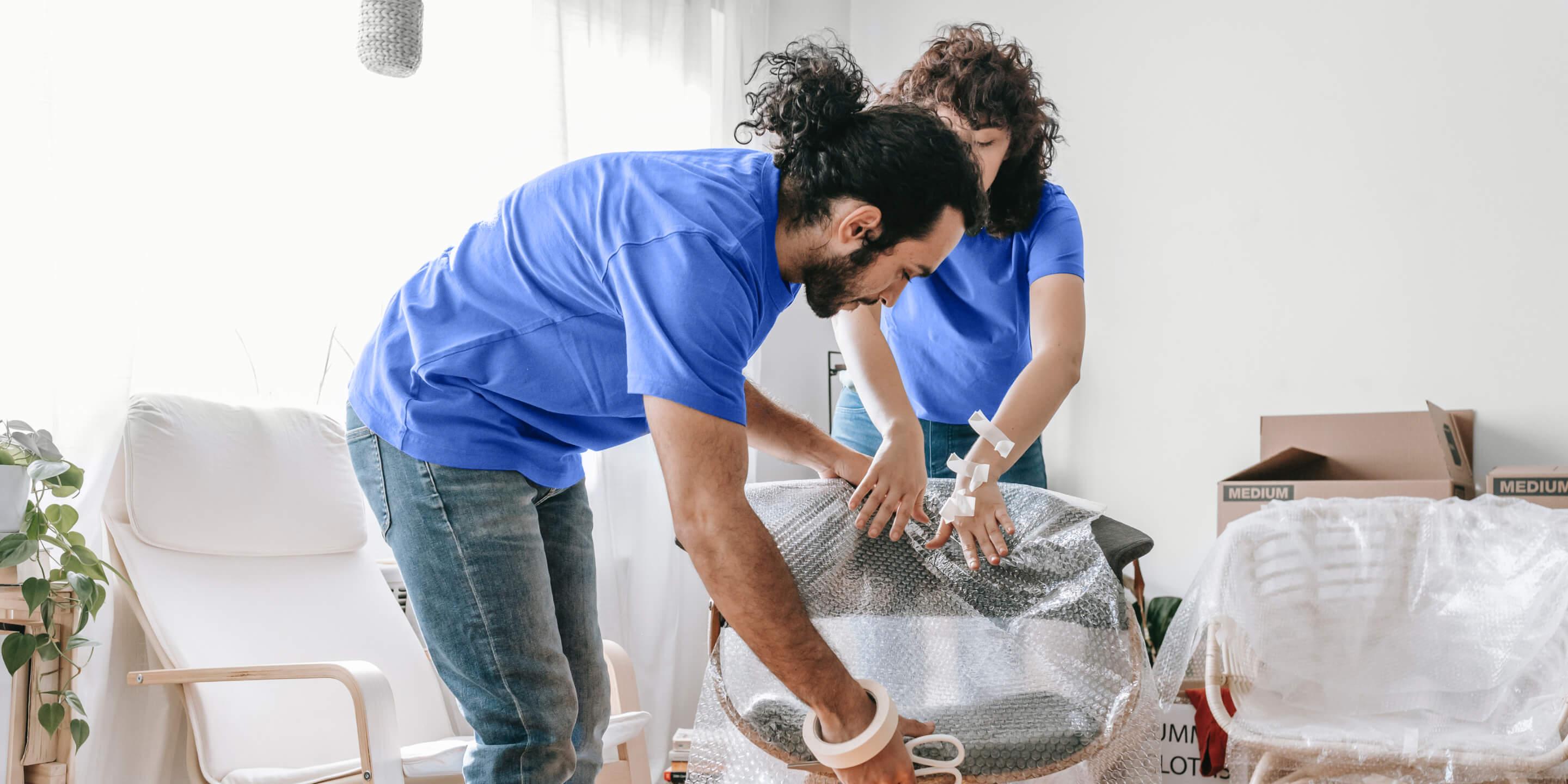
Bubble wrap, packing paper, and moving blankets are your best tools for protecting furniture parts during transit.
- Glass tabletops: wrap in bubble wrap and secure with tape, then add a layer of cardboard
- Wooden legs and edges: use foam padding or moving blankets to prevent scratches
- Metal frames: wrap with packing paper to avoid scuffing other items
Pay extra attention to corners and protruding elements, as these are most vulnerable during loading and transport.
6. Use furniture sliders
Plastic or rubber furniture sliders placed under furniture legs allow you to move heavy pieces smoothly across floors without causing scratches or damage.
Sliders make it much easier to navigate furniture through tight spaces and around corners. They are inexpensive and can save you significant effort on moving day.
7. Pack with the right materials
Using the correct materials makes a huge difference in how well your furniture survives the move:
- Sturdy corrugated cardboard boxes for smaller components and hardware
- Bubble wrap for impact absorption on fragile surfaces
- Moving blankets for wrapping large items like dressers and sofas
- Foam padding for furniture legs and delicate edges
- Packing tape to secure drawers and cabinet doors
- Furniture straps to keep items secure inside the moving truck
Stack carefully inside the truck with heavier items on the bottom and lighter items on top.
8. Label everything
Clear labeling saves hours during unpacking:
- Mark every box with its contents and destination room
- Use color-coded stickers for quick identification (one color per room)
- Attach adhesive labels to disassembled furniture parts indicating which piece they belong to and the assembly order
Good labeling prevents confusion and ensures nothing gets lost in the shuffle.
9. Hire professional movers
For large, heavy, or valuable furniture pieces, professional movers are worth the investment. They have the equipment, experience, and technique to handle items that are difficult to move safely on your own.
When choosing movers:
- Research their credentials and licensing
- Check online reviews and ratings
- Request up to four quotes for comparison
- Ask about their process for handling furniture specifically
Estimate your moving costs to get an idea of what professional help will run.
10. Insure your furniture
Before moving day, check whether your homeowner's or renter's insurance covers belongings during transit. Many policies have limitations or exclusions for items in a moving truck.
If coverage is insufficient, consider purchasing additional moving insurance or transit insurance. Document all furniture with photos and keep receipts as proof of value in case you need to file a claim.
Recommended next steps
Ready to pack up and move? These resources can help: