Quick answer
The fastest way to downsize before a move is to sort every room into four categories: keep, sell, donate, and discard. Start at least four to six weeks before your move date, tackle one room at a time, and be honest about what you actually use. Selling and donating items reduces your moving load, which directly lowers your moving costs because movers charge based on weight and volume. The less you move, the less you pay.
Estimate your moving costs to see how much lighter loads translate into real savings.
Why downsizing saves you money
Most people underestimate how much their belongings weigh and how much space they occupy. When you hire professional movers, the price is calculated based on three primary factors: weight, volume, and time. Every extra box, piece of furniture, and bag of clothes adds to the total.
Weight-based pricing
Long-distance moves are priced primarily by weight. A typical household accumulates hundreds of pounds of items that go unused for years. Eliminating even 20 to 30 percent of your belongings before the truck arrives can save you hundreds on a local move and well over a thousand dollars on a cross-country relocation.
Fewer boxes, lower material costs
Every box you pack requires packing materials: tape, paper, bubble wrap, and the box itself. Fewer items mean fewer boxes, less packing material, and less time spent packing and unpacking at your new home.
Faster load and unload times
Professional movers often charge by the hour for local moves. A streamlined household loads faster, which means fewer labor hours on your invoice. What might take a full crew six hours with a packed home could take four hours with a well-downsized one.
Get a free moving quote to establish your baseline cost, then see how much you can shave off by decluttering first.
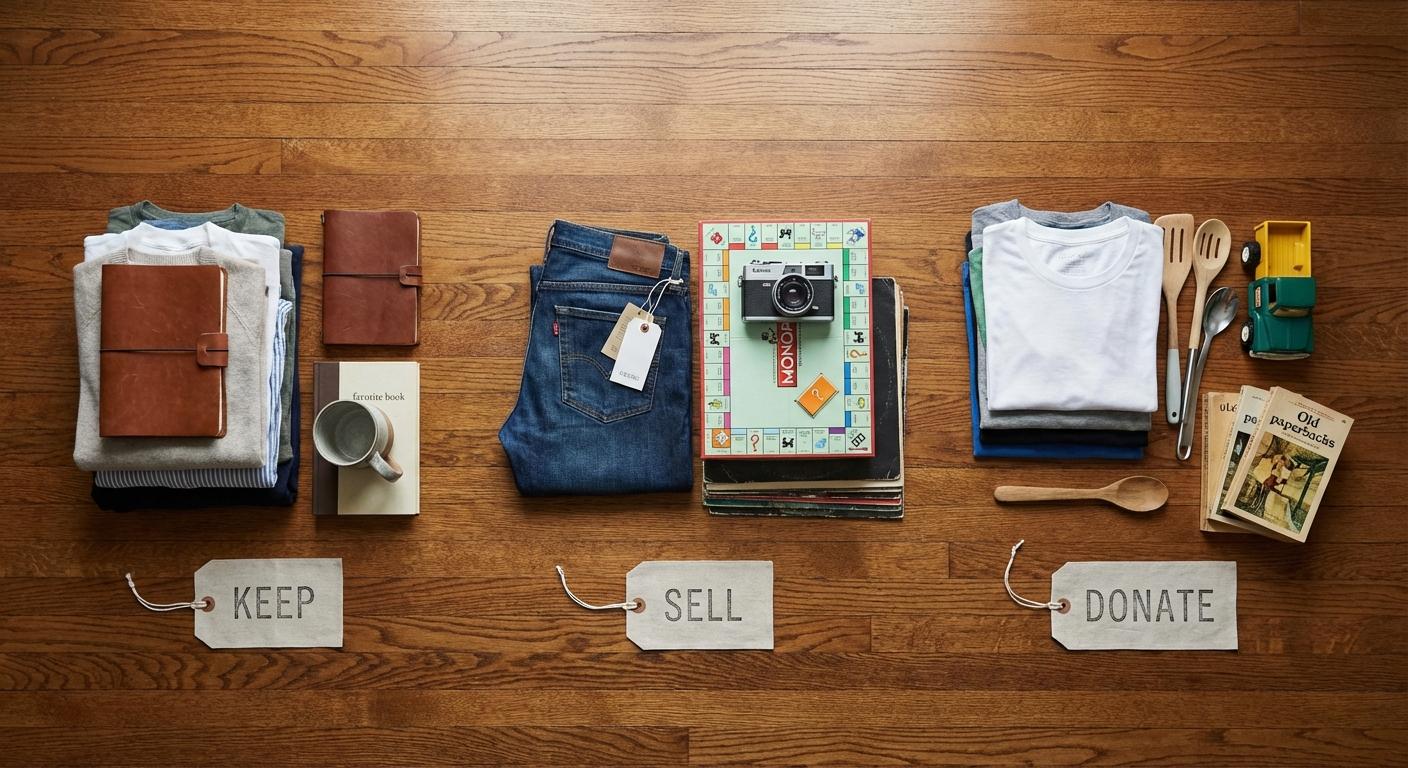
The keep-sell-donate-discard method
Before diving into individual rooms, establish a simple system that keeps you focused and prevents decision fatigue.
Keep
Items you use regularly, items with genuine sentimental value, and anything essential for daily life at your new home. Ask yourself: have I used this in the past 12 months? Does it fit my new space? If the answer to both is no, it does not belong in the keep pile.
Sell
Items in good condition that have resale value. Furniture, electronics, brand-name clothing, sporting equipment, and tools all sell well. If you can get a fair price for it and you do not need it, sell it.
Donate
Functional items that are not worth the effort of selling individually. Everyday clothing, kitchen gadgets, books, older furniture, and household goods in decent shape are perfect donation candidates.
Discard
Anything broken, stained, expired, or beyond reasonable repair. Worn-out shoes, cracked dishes, outdated electronics with no resale value, and items that no charity would accept belong here. Discard responsibly by recycling where possible.
Set up four clearly labeled boxes or bins in each room as you work through it. Having physical containers prevents the common trap of creating one massive unsorted pile.
Room-by-room downsizing guide
Tackle your home one room at a time. This prevents overwhelm and gives you a sense of progress as each space is completed.
Kitchen
Kitchens accumulate more duplicate and forgotten items than almost any other room. Be ruthless here.
- Remove duplicate utensils, pots, pans, and baking sheets you never use
- Discard chipped or cracked dishes, mugs, and glassware
- Sort through the junk drawer and toss expired coupons, dead batteries, and mystery keys
- Donate specialty appliances you have not used in the past year (bread makers, fondue sets, juicers)
- Use up pantry items before the move and donate unexpired non-perishables to a local food bank
- Check expiration dates on spices, condiments, and canned goods
Bedroom and closets
Clothing is one of the heaviest and most space-consuming categories in any move.
- Apply the one-year rule: if you have not worn it in 12 months, it goes
- Remove clothing that no longer fits, regardless of sentimental attachment to a future version of yourself
- Sort through accessories, shoes, and bags with the same critical eye
- Pare down bedding to what you actually use, donating extra blankets, pillows, and sheet sets
- Clear out nightstand drawers of old magazines, chargers for devices you no longer own, and miscellaneous clutter
Living room
- Evaluate furniture against the floor plan of your new home and sell pieces that will not fit
- Sort through bookshelves and keep only the books you will genuinely reread or reference
- Donate board games, puzzles, and DVDs that have not been touched in years
- Remove outdated or redundant electronics and their tangled cords
- Declutter decorative items and keep only the pieces that truly enhance your space
Bathroom
Bathrooms are smaller but accumulate surprising amounts of waste.
- Discard expired medications, old prescriptions, and supplements past their date
- Toss dried-out nail polish, expired sunscreen, and half-used beauty products
- Remove duplicate towels and keep only what you need for your household
- Sort through under-sink cabinets for cleaning products you no longer use
- Consolidate partially used bottles of the same product
Garage and storage areas
This is often where the biggest volume reductions happen. Garages and storage spaces tend to become dumping grounds for items you never dealt with.
- Sort through tools and keep only what you use or what suits your new home
- Sell or donate sporting equipment that has gone unused for multiple seasons
- Discard dried-out paint cans, old chemicals, and broken holiday decorations
- Evaluate large items like lawn mowers and snow blowers based on your new home's needs
- Go through boxes you never unpacked from a previous move; if you have not opened them in years, you likely do not need what is inside
Kids' rooms
Children outgrow belongings rapidly, making their rooms a prime target for downsizing.
- Remove outgrown clothing and shoes
- Sort toys by age appropriateness and donate anything the child has outgrown
- Thin out art supplies, coloring books, and craft materials
- Let older children participate in the process to teach them about organization and generosity
- Keep sentimental items like favorite stuffed animals but be selective
Where to sell your stuff
Selling items before a move puts cash in your pocket and reduces your load at the same time.
- Facebook Marketplace works well for furniture, electronics, and larger household items because buyers can see the item and pick it up locally
- OfferUp is another strong option for local sales with built-in messaging and ratings
- Craigslist remains effective for furniture, tools, and appliances, though always meet buyers safely
- Poshmark and ThredUp are ideal for selling clothing, shoes, and accessories
- Consignment shops handle the selling process for you in exchange for a percentage, which works well for higher-end furniture and designer items
- Garage sales let you sell dozens of items in a single weekend; check out our garage sale guide for tips on pricing, promotion, and setup
Start selling four to six weeks before your move to give yourself time to list items, communicate with buyers, and arrange pickups.
Where to donate
Donating usable items keeps them out of landfills and benefits your community. Many donations are also tax-deductible if you itemize, so keep receipts.
- Goodwill accepts clothing, furniture, electronics, books, and housewares at drop-off locations nationwide
- Salvation Army offers free pickup for large furniture and appliances in many areas
- Habitat for Humanity ReStore specializes in gently used building materials, furniture, appliances, and home improvement items
- Local shelters and transitional housing programs often need kitchenware, bedding, towels, and cleaning supplies
- Libraries accept book donations
- Schools and daycare centers welcome children's books, toys, and art supplies
Call ahead to confirm what each organization currently accepts, as policies can change seasonally.
What to discard responsibly
Some items cannot be sold or donated and need proper disposal.
- Electronics recycling: Many municipalities offer e-waste drop-off events or permanent collection sites. Retailers like Best Buy and Staples also accept old electronics for recycling
- Hazardous materials: Old paint, solvents, pesticides, and motor oil should never go in regular trash. Check your local government website for hazardous waste collection schedules
- Batteries: Rechargeable and lithium batteries require special disposal. Many hardware stores and recycling centers accept them
- Mattresses: Some areas have mattress recycling programs. If yours is stained or damaged beyond use, contact your waste management provider for disposal options
- Medications: Many pharmacies and police stations have drug take-back programs for safe disposal of expired or unused prescriptions
Taking the time to dispose of items properly protects the environment and keeps hazardous materials out of landfills.
Downsizing timeline checklist
Spreading the work across several weeks makes downsizing manageable rather than overwhelming.
6 to 8 weeks before the move
- Walk through every room and take inventory of what you own
- Identify large items to sell and list them online immediately since furniture takes time to sell
- Research donation organizations in your area and confirm drop-off or pickup options
4 to 6 weeks before the move
- Begin the room-by-room sort using the keep-sell-donate-discard method
- Start with low-traffic rooms like the garage, guest bedroom, and storage areas
- Schedule a garage sale date if you plan to host one
- List smaller items for sale online
2 to 4 weeks before the move
- Complete sorting in high-traffic rooms like the kitchen, living room, and primary bedroom
- Host your garage sale
- Schedule donation pickups or plan drop-off trips
- Dispose of hazardous materials and e-waste at designated facilities
1 to 2 weeks before the move
- Do a final sweep of every room and make last-minute decisions on remaining items
- Confirm that all sold items have been picked up
- Drop off final donations
- Begin packing the items you are keeping
Moving week
- Pack remaining daily-use items
- Verify that nothing in the discard or donate piles accidentally ended up in moving boxes
- Do a final walkthrough of the home to check closets, cabinets, attic, and crawl spaces
Next steps
Downsizing is one of the most impactful things you can do before a move. It saves money, reduces stress, simplifies unpacking, and gives you a fresh start in your new home. The key is starting early, working systematically, and being honest about what truly deserves a spot in your next chapter.
Once you have finished decluttering, you will have a much clearer picture of your actual moving load. Get a free moving quote based on your streamlined inventory and see how your downsizing effort translates into real savings on moving day.